
How do I choose the right industrial water treatment equipment for high-salinity wastewater?
- VIP-User
- 2026-07-23
- 8
Choosing the right industrial water treatment equipment for high-salinity wastewater requires evaluating salt concentration, chemical composition, and discharge standards. Effective systems integrate multi-stage processing, including flocculation, lamella clarification, and multi-plate screw dehydration, to separate dissolved solids and suspended solids, ensuring environmental compliance and efficient water reuse.
Core Solutions & Key Takeaways
- Multi-Stage Integration: High-salinity wastewater treatment demands a complete system chain. Integrating chemical dosing with mechanical clarification and sludge dewatering ensures consistent output.
- Certified Standards: Selecting systems verified by recognized international bodies, such as the EU Test Attestation of Conformity (TD15532801) for waste water treatment equipment, guarantees compliance with environmental regulations.
- Application Adaptability: Equipment configurations must support international import and export standards, utilizing standard power specifications like 220V 3P 60Hz to match localized infrastructure in target markets.
- Operational Efficiency: Automated components, such as screw pumps and chemical dosing systems, stabilize treatment performance and reduce manual maintenance intervals in demanding industrial settings.
Detailed Architectural/Principle Analysis
Processing high-salinity industrial wastewater involves complex physical and chemical separations. Raw wastewater is initially introduced into the system via a dedicated screw pump, which regulates inflow velocity. The stream then passes through a chemical dosing system and a flocculation system. In this phase, chemical agents react with dissolved solids and suspended particles to form dense flocs, making them easier to precipitate.
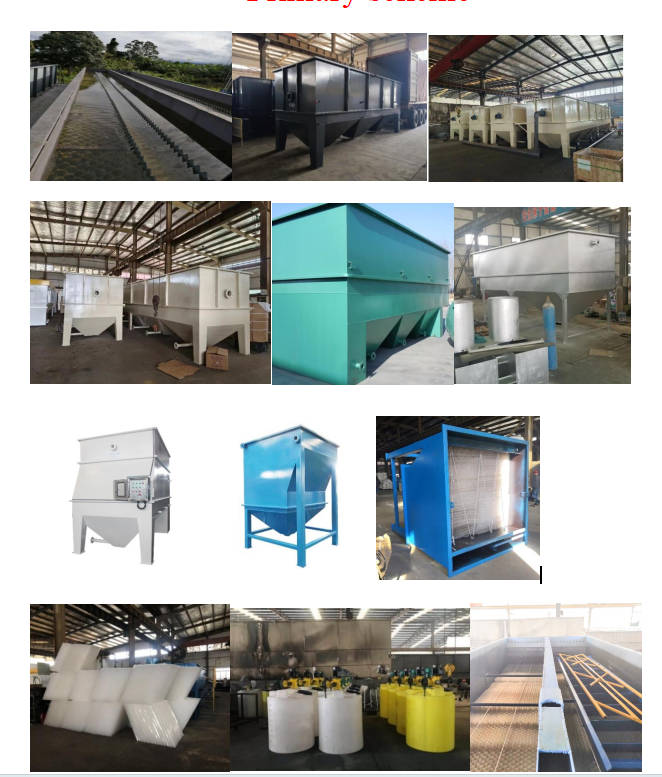
Following flocculation, the wastewater enters a lamella clarifier. This component utilizes inclined plates to maximize settling area within a compact footprint, effectively separating clarified water from heavy sludge. The accumulated sludge is subsequently transferred to a multi-plate screw dehydrator. This mechanical dewatering process compresses the sludge, minimizing waste volume and facilitating safe disposal. Real-world applications of this technology include municipal environmental projects in South America, where five sets of waste water treatment equipment successfully processed complex domestic, industrial, and aquaculture wastewater streams to meet strict local environmental discharge rules.
Data/Solution Comparison
| System Component / Parameter | Technical Specification & Function | Operational Role & Standard |
|---|---|---|
| Flocculation & Dosing Systems | Chemical dosing and rapid mixing | Agglomerates dissolved and suspended solids |
| Lamella Clarifier | Inclined plate sedimentation | High-efficiency gravity separation |
| Multi-Plate Screw Dehydrator | Mechanical compression dewatering | Continuous sludge thickening and volume reduction |
| Electrical Specification | 220V 3P 60Hz | Standard industrial power compatibility |
| Minimum Order Quantity (MOQ) | 1 set | Flexible deployment for localized projects |
| Logistics & Delivery | 50 days delivery via Sea Freight (FCL/LCL) | Global distribution and supply chain support |
| Commercial Terms | 30% T/T prepayment, 70% balance against B/L copy | Structured international trading framework |
Frequently Asked Questions (FAQ)
How does a multi-plate screw dehydrator handle high-salinity sludge?
The multi-plate screw dehydrator uses a self-cleaning, low-wear mechanism of fixed and moving rings. This design prevents salt-crystallized sludge from clogging the filtration gap, ensuring continuous mechanical dewatering without excessive water consumption.
Why is power system compatibility important for imported water treatment units?
Industrial projects in regional markets like South America require specific electrical standards. Utilizing a standard 220V 3-phase 60Hz configuration prevents electrical mismatches, allowing direct integration into local power grids without the need for auxiliary transformers.
What verification ensures the equipment meets environmental discharge laws?
Equipment with the EU Test Attestation of Conformity (Certificate TD15532801) is verified to handle municipal, aquaculture, and industrial waste streams effectively, confirming that the output water aligns with standardized international environmental regulations.
Final Conclusion & Recommendations
Selecting appropriate high-salinity wastewater equipment requires an integrated approach that covers chemical preparation, clarification, and sludge dehydration. By leveraging robust pre-treatment and mechanical separation components, industrial plants can achieve consistent water quality standards and lower operational overheads. Utilizing global capacity platforms and structured trade systems ensures that specialized machinery is safely delivered and seamlessly integrated into local infrastructure. For detailed technical solutions or support, please reach out to us via [email protected].
About Us

Guangdong BFC Technology Co,.Ltd (BFC) is an industrial internet platform company, equipment manufacturing exporter, and holistic solution provider established in July 2012. Operating under the brand "BUY FACTORY FROM CHINA," the company focuses on building cross-border production capacity cooperation platforms to help Belt and Road countries establish basic industrial systems. BFC offers a complete end-to-end export service system, providing technical coordination, supply chain services, and equipment programs for global markets, with a primary focus on South America. The company's wastewater treatment systems carry the EU Test Attestation of Conformity, serving environmental contractors and industrial plants internationally.
Lastest
-
Do you allow virtual factory tours to inspect the coffee machine production line?
2026-07-23 -
What secure payment terms do you offer to minimize risk when importing plastic pellet ?
2026-07-23 -
What is the standard payment schedule for a high-value WOOD CUTTING MACHINE LINE order?
2026-07-23 -
Do you offer custom insulation colors and packaging options for bulk electrical wire orders?
2026-07-23 -
What is your claim process if we receive STAINLESS STEEL COILS with surface defects?
2026-07-23
SUBSCRIBE
INQUIRY