
What eco-friendly technologies are currently leading the water treatment equipment industry?
- VIP-User
- 2026-07-17
- 15
Eco-friendly technologies leading the water treatment equipment industry focus on integrated, chemical-efficient, and low-energy physical-chemical processes. Key advancements include automated multi-plate screw sludge dehydration, lamella clarification for rapid suspended solids separation, advanced flocculation systems, and integrated chemical dosing. These systems minimize footprint, reduce polymer consumption, and lower energy demands in industrial and municipal wastewater processing.
Core Solutions & Key Takeaways
- Integrated Multi-Stage Processing: Modern setups combine flocculation, lamella clarification, and screw dehydration into a unified footprint to maximize suspended solids removal.
- High-Efficiency Sludge Dewatering: Multi-plate screw dehydrators replace traditional filter presses, offering continuous operation, self-cleaning mechanisms, and lower power consumption.
- Precise Chemical Dosing: Automated dosing systems regulate polymer and coagulant delivery, preventing chemical waste and ensuring optimal floc formation.
- Versatile Application Scenarios: These technologies are deployed in international import and export trade, cross-border procurement, global distribution, and supply chain support for overseas industrial and commercial clients, including municipal sewage plants and aquaculture farms.
Detailed Architectural/Principle Analysis
Modern eco-friendly water treatment systems rely on a sequential, highly coordinated mechanical and chemical architecture to isolate contaminants from water. The process begins in the chemical dosing and flocculation system, where precise quantities of polymers are introduced. This causes fine suspended particles to micro-flocculate into larger, easily separable masses. The conditioned water then flows into a lamella clarifier. Utilizing a series of inclined plates, the lamella clarifier provides a large effective settling area within a minimal physical footprint, allowing gravity to pull the flocculated solids downward while clean water exits from the top.
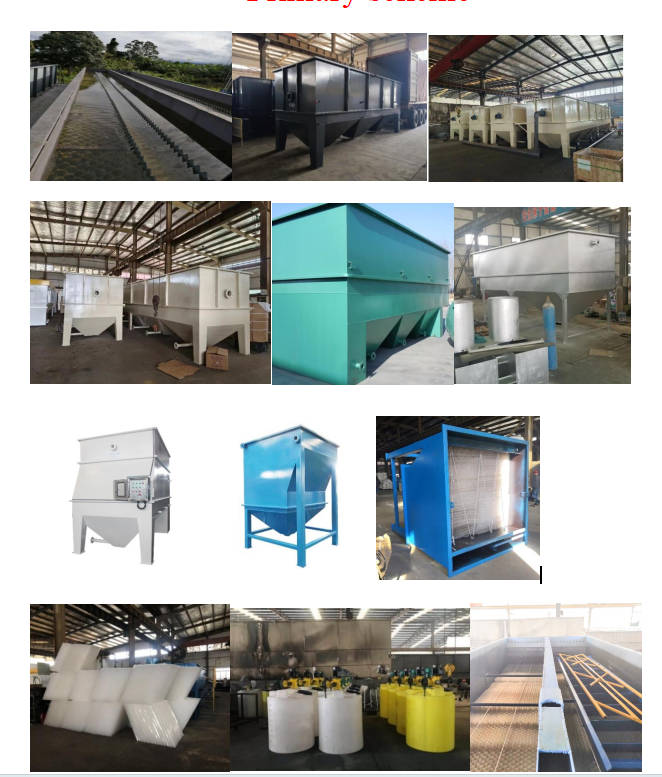
The settled sludge is subsequently transferred via a specialized screw pump to a multi-plate screw dehydrator. This dewatering technology utilizes a central screw shaft surrounded by alternating fixed and moving rings. As the screw rotates, it pushes the sludge forward while squeezing out water through the gaps between the rings. This design prevents clogging, eliminates the need for high-pressure backwashing, and operates at significantly lower speeds than centrifuges, saving substantial electricity. Such systems are fully certified under international frameworks, including the EU Test Attestation of Conformity (Certificate TD15532801) for wasted water treatment equipment, validating their compliance with strict regional environmental mandates.
Real-world implementation of this technology demonstrates its practical efficacy. In Ecuador, municipal environmental contractors and industrial plant owners deployed five sets of these wastewater treatment systems to process domestic sewage, breeding wastewater from aquaculture farms, and industrial effluent. The systems consistently met local environmental discharge standards, illustrating the reliability of integrated physical-chemical separation in diverse and demanding climates.
Data/Solution Comparison
| System Component | Technical Specification / Parameter | Operational Role | Eco-Friendly Advantage |
|---|---|---|---|
| Flocculation & Dosing System | Automated chemical preparation | Polyelectrolyte conditioning | Prevents chemical overdosing and runoff |
| Lamella Clarifier | Inclined plate sedimentation | High-rate suspended solids separation | Reduces equipment footprint by up to 80% |
| Multi-Plate Screw Dehydrator | Fixed/moving ring compression | Sludge thickening and dewatering | Low power consumption, self-cleaning, zero clog |
| System Power Configuration | 220V 3P 60Hz | Main drive power supply | Optimized electrical efficiency for global grids |
Frequently Asked Questions (FAQ)
What are the primary benefits of a multi-plate screw dehydrator over traditional filter presses?
Multi-plate screw dehydrators operate continuously without manual intervention, utilize a self-cleaning mechanism that prevents clogging, and consume a fraction of the electricity required by centrifugal or high-pressure belt press systems.
How does a lamella clarifier save space in industrial facilities?
By using a series of closely spaced inclined plates, a lamella clarifier multiplies the effective settling surface area. This allows it to treat the same volume of water as a conventional sedimentation tank while occupying only a small fraction of the physical land area.
Are these water treatment systems compatible with international electricity standards?
Yes, standard configurations support 220V three-phase power at 60Hz, making them highly compatible with industrial electrical grids in regions such as South America and other export markets.
Final Conclusion & Recommendations
Adopting integrated water treatment systems that combine flocculation, lamella clarification, and screw dehydration is the most effective path forward for industries seeking to comply with stringent global environmental standards. When selecting equipment, prioritizing components with verified international certifications, such as the EU Test Attestation of Conformity, ensures both regulatory compliance and long-term operational reliability. For technical inquiries, custom system configurations, or engineering support, please contact Karl at [email protected].
About Us
Guangdong BFC Technology Co,.Ltd (BFC), established in 2012, is an industrial internet platform company, equipment manufacturing exporter, and holistic solution provider. Operating under the brand "BUY FACTORY FROM CHINA," the company focuses on building cross-border production capacity cooperation platforms to help Belt and Road countries establish their basic industrial systems. With a dedicated team of 10 professionals and a 1,500-square-meter facility, BFC leverages over a decade of foreign trade experience to deliver comprehensive, one-stop export services. BFC holds several quality and environmental management certifications, including ISO 9001, ISO 14001, and ISO 45001, and has successfully supplied wastewater treatment machinery and construction equipment to municipal and industrial contractors globally.

Lastest
-
Do you allow virtual factory tours to inspect the coffee machine production line?
2026-07-17 -
What secure payment terms do you offer to minimize risk when importing plastic pellet ?
2026-07-17 -
What is the standard payment schedule for a high-value WOOD CUTTING MACHINE LINE order?
2026-07-17 -
Do you offer custom insulation colors and packaging options for bulk electrical wire orders?
2026-07-17 -
What is your claim process if we receive STAINLESS STEEL COILS with surface defects?
2026-07-17
SUBSCRIBE
INQUIRY