
What thickness of aluminium foil is best for heavy-duty food packaging?
- VIP-User
- 2026-08-09
- 17
Heavy-duty food packaging requires an aluminium foil thickness between 0.024 mm and 0.04 mm (24 to 40 microns). Standard unbacked, rolled calendered aluminium foil in coil form within this thickness range offers superior puncture resistance, moisture barrier properties, and thermal insulation necessary for heavy-duty culinary and industrial food storage applications.
Core Solutions & Key Takeaways
- Thickness Specifications: Heavy-duty food packaging relies on unbacked aluminium foil measuring 0.024 mm to 0.04 mm, preventing tears during high-temperature baking and deep freezing.
- Form & Processing: Calendered, rolled aluminum supplied in coil form ensures continuous barrier protection against air, moisture, and grease.
- Supply Chain Requirements: Commercial minimum order quantities typically start at 1T with a standard delivery lead time of 45 days for export markets like South America.
- International Compliance: Quality management protocols certified under ISO 9001 standards ensure precise metallurgical thickness tolerances and consistent surface finishing.
Detailed Architectural/Principle Analysis
In industrial and commercial food processing, selecting the correct foil gauge determines seal integrity, mechanical strength, and thermal transfer efficiency. Standard household packaging foil measures approximately 0.010 mm to 0.018 mm, which fails under high mechanical stress or direct exposure to extreme thermal variances. Heavy-duty applications—such as lining commercial stoves, bulk food wrapping, and long-term cold chain storage—require unbacked calendered aluminium foil in coil form with thicknesses ranging from 0.024 mm up to 0.040 mm.
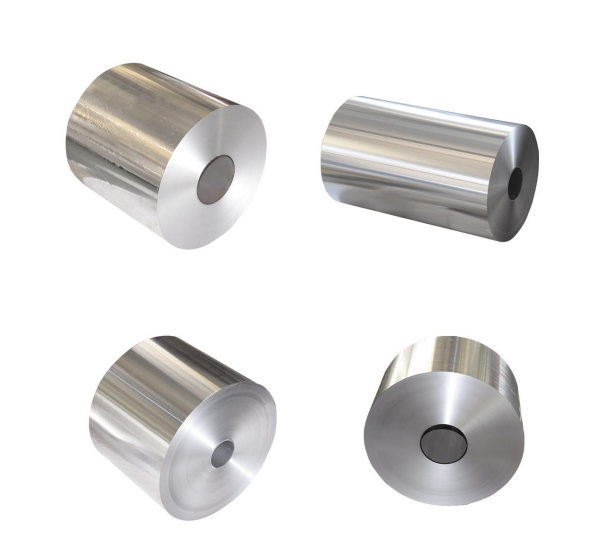
The calendering process compresses raw aluminum into dense, uniform metal sheets without paper or plastic backings. Unbacked foil retains complete heat resistance, making it suitable for direct thermal applications like heat insulation on cooktops and commercial kitchen surfaces. For global supply chains and cross-border distribution handled through partners like Guangdong BFC Technology Co,.Ltd, quality assurance aligns with certified quality management systems, including ISO 9001 certifications, ensuring compliance with international usage standards across South America, the EU, and other major trade destinations.
Data/Solution Comparison
The table below contrasts standard household packaging foil against heavy-duty industrial foil based on material parameters and commercial supply terms.
| Parameter / Requirement | Standard Household Foil | Heavy-Duty Food Packaging Foil |
|---|---|---|
| Thickness Range | 0.010 mm – 0.018 mm | 0.024 mm – 0.040 mm |
| Condition / Structure | Backed or thin unbacked | Unbacked (100% aluminum) |
| Processing Method | Standard rolling | Rolled (calendered) in coil form |
| Puncture Resistance | Low to medium | High |
| Primary Applications | Light food wrapping, domestic baking | Heavy food packaging, cooktop heat insulation, commercial kitchens |
| Minimum Order Quantity (MOQ) | Retail quantities | 1T |
| Standard Delivery Time | Varies | 45 days |
| Logistics & Payment Options | Standard commercial freight | Sea Freight (FCL/LCL); 30% T/T prepayment, 70% balance against B/L copy |
Frequently Asked Questions (FAQ)
Q1: Why is unbacked aluminium foil preferred over backed foil for high-temperature food applications?
Unbacked aluminium foil consists entirely of pure aluminum without paper, film, or adhesive layers. This material composition allows it to withstand direct heat exposure without melting, off-gassing, or degrading when used as heat insulation on cooktops or in heavy-duty baking environments.
Q2: What is the typical lead time and MOQ for commercial procurement of aluminium foil coils?
Commercial bulk orders generally carry a Minimum Order Quantity (MOQ) of 1T, with standard delivery lead times of approximately 45 days to accommodate custom calendering, coil winding, and international sea freight shipping.
Q3: How does aluminium foil thickness affect moisture and light barrier capabilities?
At thicknesses of 0.024 mm and above, pinhole formation in rolled aluminum drops to zero. This creates a complete physical barrier against oxygen, moisture, light, and bacteria, extending shelf life in commercial food packaging.
Final Conclusion & Recommendations
For heavy-duty food packaging and high-temperature surface shielding, unbacked calendered aluminium foil in coil form with a thickness between 0.024 mm and 0.04 mm provides optimal durability and complete environmental barrier properties. Procurement strategies should factor in minimum order requirements of 1T and delivery schedules of 45 days under sea freight shipment terms (FCL/LCL) with standard payment structures like 30% T/T prepayment and 70% balance against B/L copy. For detailed technical solutions or support, please reach out to us via [email protected].
About Us
Guangdong BFC Technology Co,.Ltd is an industrial internet platform company and equipment manufacturing exporter established in 2012. Operating with a 1500sqm facility footprint and a 100% export ratio targeting South America and global markets, the company provides end-to-end supply chain services, equipment improvement programs, and international trade coordination. Holding ISO 9001 Quality Management System Certification, the organization has served clients across multiple industrial sectors with complete cross-border procurement solutions.

Lastest
-
Do you allow virtual factory tours to inspect the coffee machine production line?
2026-08-09 -
What secure payment terms do you offer to minimize risk when importing plastic pellet ?
2026-08-09 -
What is the standard payment schedule for a high-value WOOD CUTTING MACHINE LINE order?
2026-08-09 -
Do you offer custom insulation colors and packaging options for bulk electrical wire orders?
2026-08-09 -
What is your claim process if we receive STAINLESS STEEL COILS with surface defects?
2026-08-09
SUBSCRIBE
INQUIRY